Webclaw offers a web scraping API designed to deliver clean, structured data in formats like Markdown and JSON, optimised for AI consumption. If you need efficient, credit-based extraction without extra charges for JavaScript or protected sites, and value open-source flexibility, this could be a strong contender for your toolkit.
Our Verdict on Webclaw
Webclaw is a compelling option for developers and AI practitioners seeking a web scraping API that prioritises clean, AI-ready data output. Its single-credit model for complex pages, including JavaScript rendering and protected sites, offers predictable costs. However, if your primary need is simple, high-volume extraction without specific AI optimisation or the desire for self-hosting, you might find other tools with different pricing structures more straightforward.
Who is Webclaw Suited To?
Developers and AI agents needing clean, structured web data (Markdown, JSON) for processing, especially those looking to reduce token count for LLMs.
Users who require web scraping from pages with JavaScript or protected content, and prefer a predictable, single-credit cost model for these complex extractions.
Teams and individuals who value open-source solutions and the flexibility to self-host the entire web extraction engine for full control over their data and infrastructure.
Key Strengths of Webclaw
AI-optimised output: Webclaw offers an LLM-optimised format that strips noise and can cut token count by around 90% compared with raw HTML, making extracted data highly efficient for AI consumption.
Predictable pricing for complex pages: Unlike many scraping APIs, Webclaw charges one credit per page for all extractions, including JavaScript rendering, protected sites, and AI extraction, simplifying cost management.
Open-source flexibility: The core Webclaw engine is open source under AGPL-3.0, allowing users to self-host the CLI, REST API server, or MCP server on their own infrastructure with Docker images and deploy scripts.
Trade-offs to Consider
Managed cloud API is a one-time purchase: The AppSumo deal is for a lifetime purchase of the managed cloud API, not a subscription, which means future updates or ongoing service beyond the initial offering should be verified.
Data handling with LLMs: While extracted content is not retained beyond serving the response, using LLM-based features means page content is sent to the AI provider for processing, which may be a consideration for sensitive data.
Map vs. Crawl functionality: The 'map' tool only discovers URLs from sitemaps, while 'crawl' actually visits and extracts content. Users need to understand this distinction for efficient data gathering.
Important Buyer Notes for Webclaw Users
Verify the specifics of the 'lifetime purchase' for the managed cloud API, including any limitations on credits, features, or future support, directly with the merchant.
If data privacy is a critical concern, especially when using LLM-based features, consider the implications of page content being sent to AI providers or opt for self-hosting for full control.
Explore the open-source core by self-hosting it first to thoroughly evaluate its capabilities and suitability for your specific use cases before purchasing the managed cloud API.
Understand the distinction between 'map' (sitemap discovery) and 'crawl' (content extraction) to plan your data gathering strategy effectively and avoid unexpected credit usage.
Review the 14 tools exposed by the Model Context Protocol server, such as scrape, search, and summarize, to ensure they align with your specific AI agent or data processing requirements.
Questions about this find
What output formats does Webclaw support?
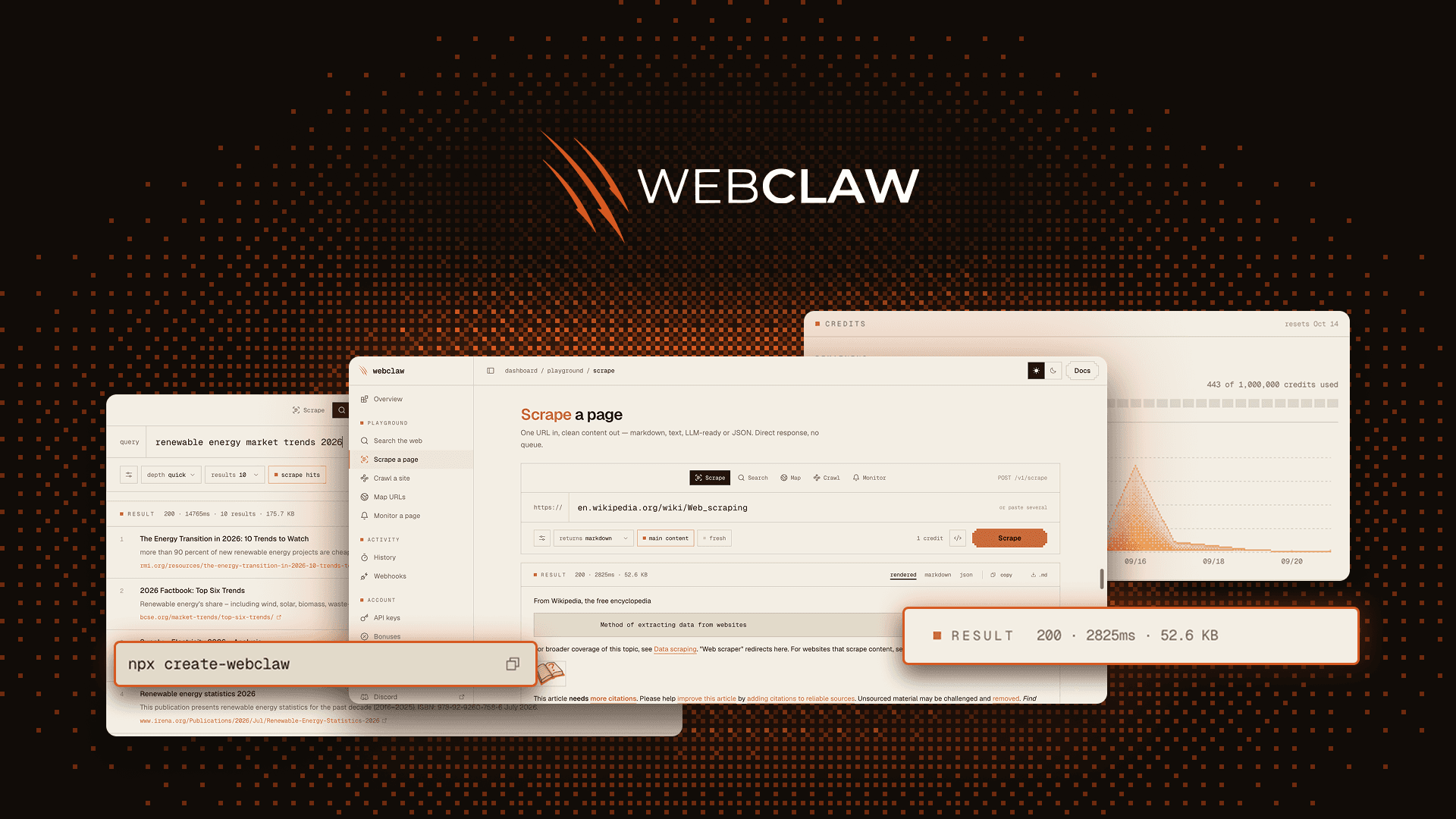
Webclaw supports six output formats: Markdown, JSON, HTML, plain text, an LLM-optimized format (which strips noise to cut token usage for AI consumption), and raw HTML.
Can I try Webclaw before buying the managed cloud API?
Yes, the open-source core of Webclaw is free to self-host with no limits and no card required. This allows you to run the full engine yourself and evaluate it before deciding on the managed cloud API purchase.
How does Webclaw handle JavaScript and protected sites?
Webclaw is designed to handle JavaScript rendering and protected sites, charging one credit per page for these complex extractions without additional fees. It uses HTTP with TLS fingerprint impersonation for efficient processing.
About this assessment
Our recommendation weighs the published details against likely buyer needs. It is based on source research, rather than personal testing. Confirm current pricing, availability and terms with the provider.
Read the current provider details.